Robust Electronics Growth in 2026: Fair Survey Finds
The global electronics sector is widely expected to sustain its growth momentum into 2026, according to the majority of respondents in the Hong Kong Electronics Fair (Autumn 2025) survey in which 1,092 industry players participated.
How Good Is the Projected Outlook of the Electronics Industry?
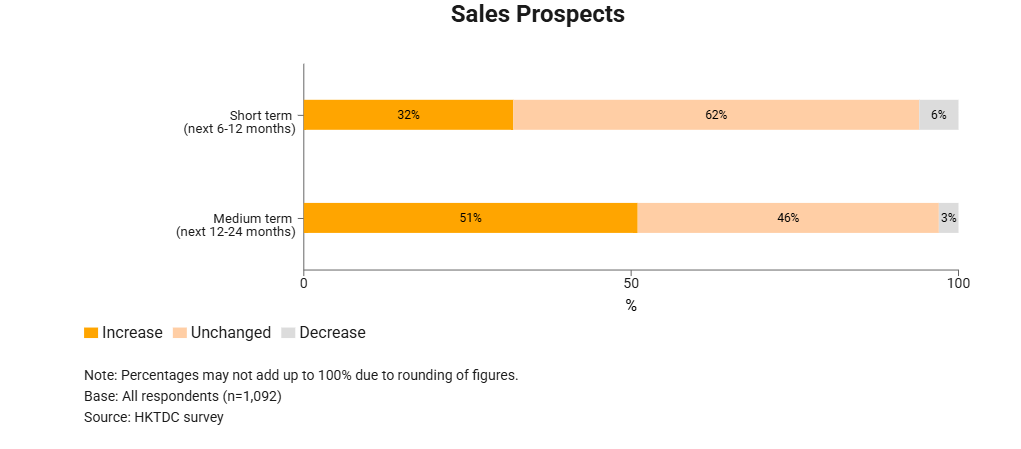
Overall, the survey indicated that many electronics traders were broadly positive with regard to their future market prospects, while largely expecting that their overall sales levels would rise or, at least, remain the same over the short (6‑to‑12 months) and medium terms (12‑24 months). More specifically, 32% of respondents expected sales to grow in the short term (with 62% expecting sales to remain stable), while 51% saw growth as likely over the medium term (with 46% expecting sales to remain stable).
Tariff Challenges On the Horizon & Relevant Mitigation Measures In Place
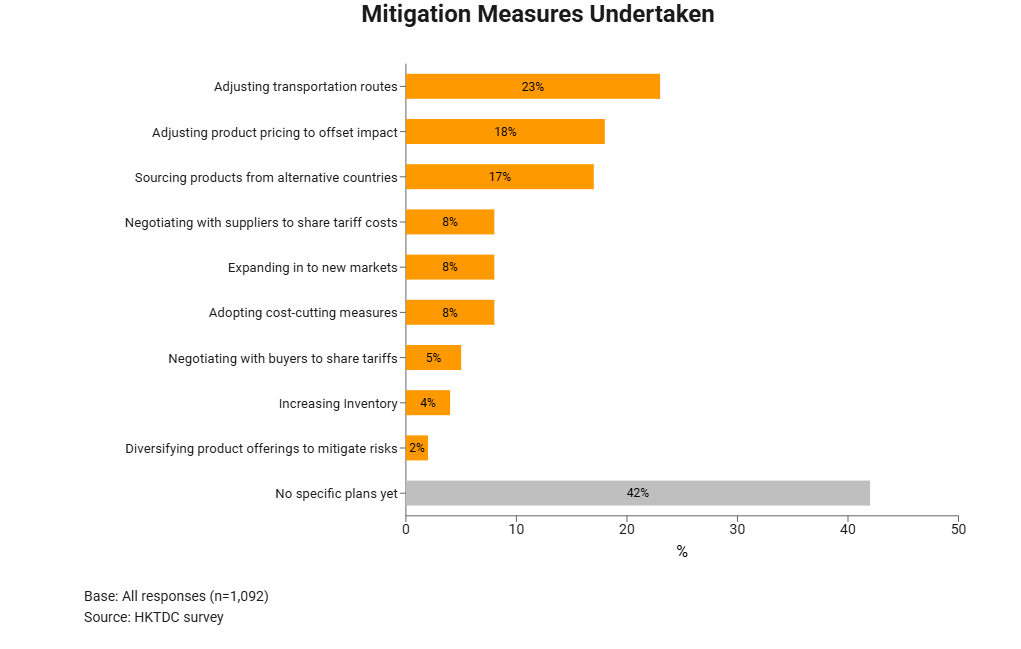
With regard to the impact of the new US tariffs on procurement and sales and marketing strategies, in order to mitigate any consequences, respondents indicated they had explored a number of strategic options, including rerouting transportation (23%) and adjusting product pricing to offset impact (18%).
Which Electronics Markets Will See Strong Growth Potential?
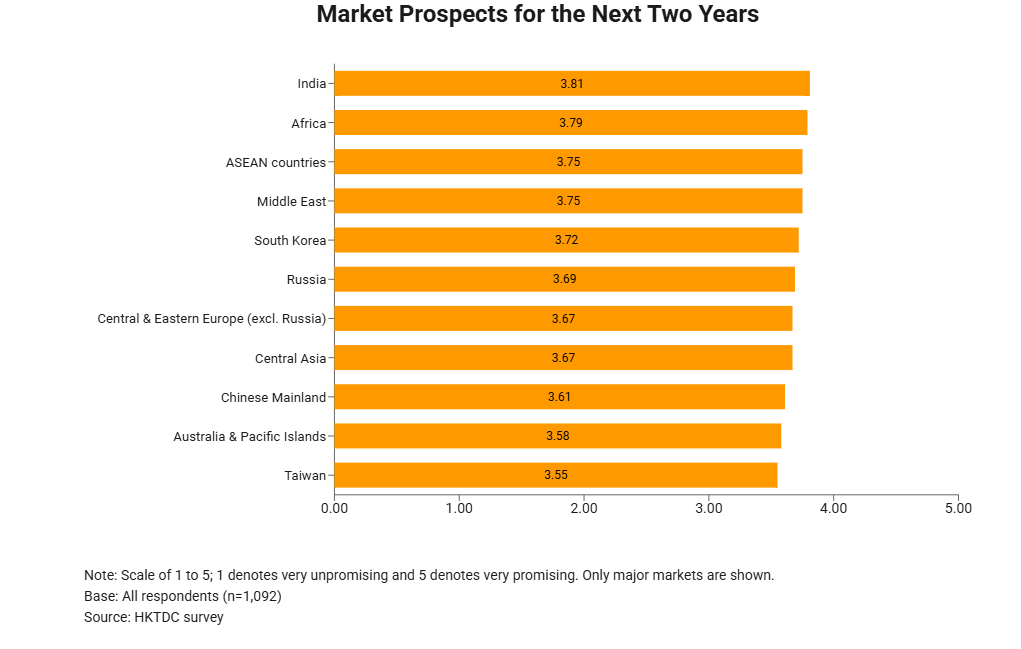
While views varied across regions, respondents expressed particular optimism over emerging markets with regard to India, Africa and many of the Asian markets.
What Electronic & Tech Products Will Stand Out in the Market?
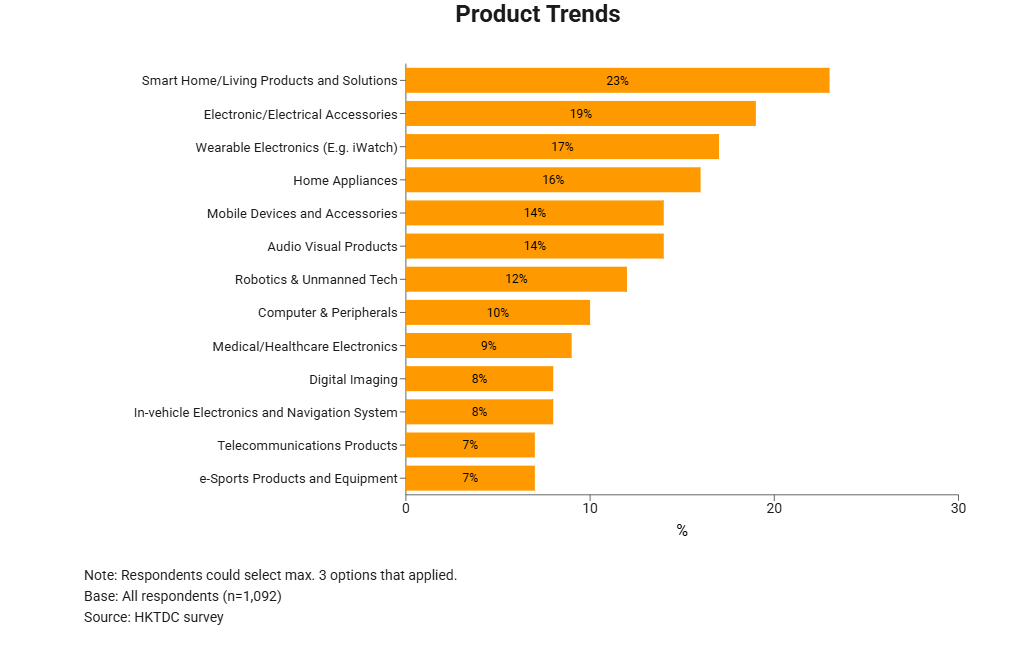
In terms of product categories tipped to do well, Internet of Things (IoT) compatible systems were seen as having the highest growth potential, with 23% of respondents endorsing this view. This was largely on account of their ever‑broadening prospects within the smart home / living products and solutions sectors. Lagging only slightly behind (cited by 19% of respondents) were Electronic / Electrical Accessories.
How Can AI Help the Electronics Sector Thrive?
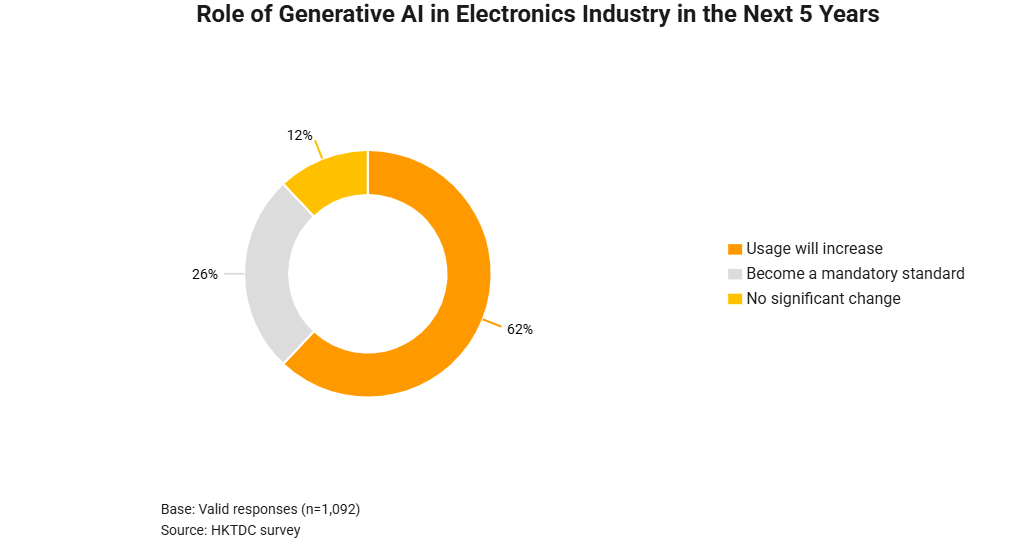
It was also notable that generative artificial intelligence (AI) continued to be a key area of interest for many survey participants. In terms of priority areas for deployment, 60% chose product design and development, with 40% also backing customer service and support. Looking ahead, nearly 90% of respondents expected Generative AI to become more significant (62%) or mandatory (26%).
Summary
Electronics traders displayed a general optimism of the electrical and tech sector and they see potential in further generative AI adoption to facilitate daily trade. They considered smart home and living as the biggest product category in the near future. Buyers and suppliers worldwide are recommended to follow these trends to achieve business growth.
Explore Full Survey Findings
Access detailed insights, including respondent profiles, via:
Explore Electronics Industry Developments in Next Fair
Register for our upcoming Hong Kong Electronics Fair (Spring Edition) in April 2026 to gain first-hand insights into the global electronics market, and meet with peers who share the same business objectives.
Click the following banner to reserve your spot:
Continue your sourcing journey on our e-Marketplace too:
Electronics Industry FAQ
1. What are the main sectors of the electronics industry?
Consumer Electronics: Smartphones, tablets, TVs, gaming consoles, and wearables.
Industrial Electronics: Automation, robotics, and control systems.
Automotive Electronics: Sensors, ECUs, infotainment, and electric vehicle systems.
Communication Electronics: Networking, 5G/6G equipment, and satellite systems.
Medical Electronics: Diagnostic devices, monitoring systems, and implants.
Defense and Aerospace Electronics: Radar, avionics, and communication systems.
2. What are current trends in the electronics industry?
Miniaturization: Smaller, more powerful devices.
IoT (Internet of Things): Connected sensors and smart devices.
AI Integration: Smarter products and automation.
5G/6G technologies: Faster communication.
Sustainability: Eco-friendly materials and recycling.
Semiconductor innovation: Advanced packaging, chiplets, new materials.