The Packaging and Packaging Waste Regulation (EU) 2025/40 (PPWR) integrates various requirements — such as substance restrictions, recyclability, recycled content, compostability, minimisation, reuse, labelling, technical documentation, the EU declaration of conformity and EPR obligations into a single, coherent system.
This article provides a comprehensive overview of the structured packaging compliance framework, and important dates to note for global buyers and suppliers.
Overview of PPWR
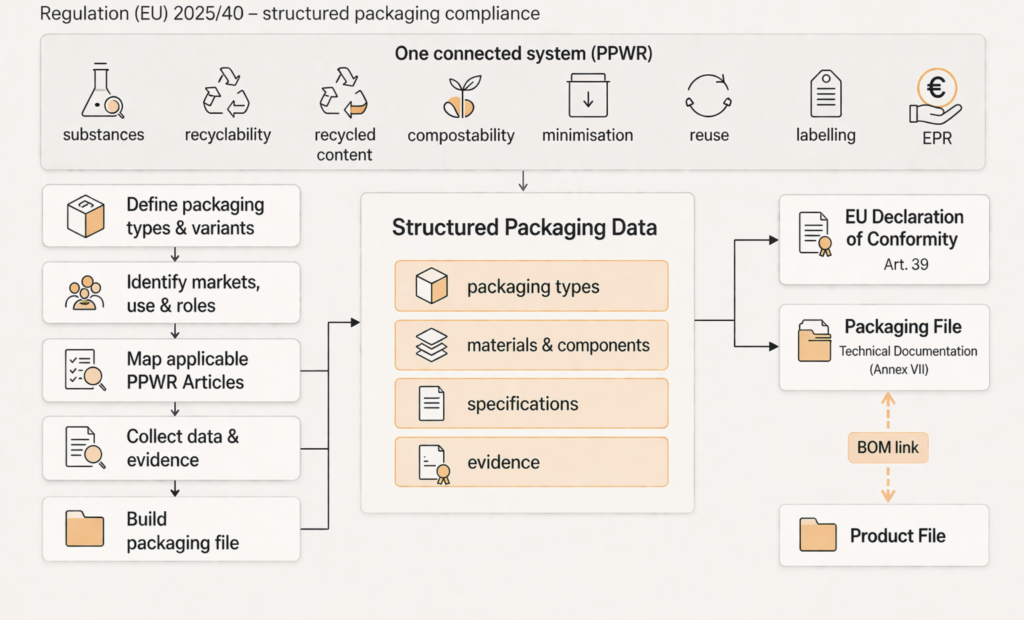
The PPWR works if packaging data is managed in a structured way, not as a loose collection of documents.
As stipulated in the diagram above, before placing packaging on the market, the manufacturer must ensure that all applicable requirements are met, the conformity assessment under Article 38 and Annex VII has been carried out, and the EU declaration of conformity under Article 39 has been issued.
Learn More:
Scope & Steps
An outer carton, an EPS insert and an accessory bag within the same packaging set may each be subject to different requirements. A practical starting point is working through requirements packaging type by packaging type, which typically involves the following steps:
- Define and separate packaging types and variants
- Identify markets by supply chain contexts and roles
- Map the applicable PPWR articles to each packaging type
- Bring everything together in a solid packaging file
Implementation Timeline
Some requirements apply from 12 August 2026, including the general recyclability obligation under Article 6(1) and the PFAS limits for food-contact packaging under Article 5(5). Others kick in from 2028, 2030 or later, but the underlying data and assessments need to be in place earlier.
Getting the PPWR structure right from the start also reduces friction later on labelling, artwork approval, change management, EPR reporting and digital information obligations.
Source Eco-Compliant Packaging from HKTDC
To enforce green supply chains, reducing packaging waste, and using recyclable and compostable packaging are the first steps to take.
Keep the green sourcing practices and contribute to an environmentally-friendly ecosystem by joining hktdc.com Sourcing, our e-Marketplace dedicated to eco-conscious buyers and suppliers like you, and explore green products from diverse categories.
Start your discovery today:
This article is originally published by ProductIP:
Caspar ter Horst – Managing Director, ProductIP
Caspar has 25+ years of experience in product compliance. In 2008, he co-founded ProductIP together with Maarten van der Dussen. Caspar and his team are dedicated to support companies within the supply chain to efficiently demonstrate to customers, authorities, and users that their products meet applicable legislation and buying requirements. As a result, helping companies reduce costs, streamline operations, manage suppliers, and at the same time put compliant, safer, more sustainable products to the market.

EU PPWR FAQ
1. What is the EU PPWR?
PPWR refers to the EU’s Packaging and Packaging Waste Regulation framework that sets rules for packaging design, composition, recycling targets, labeling, and responsibilities across the packaging value chain.
2. Do suppliers need to change packaging immediately?
Not always, but buyers should assume:
- There will be staged timelines for different obligations
- Some packaging may require redesign to meet recycling/recyclability and restrictions
- You should plan conversion timelines now so you don’t get blocked at launch or re-packaging stages
3. What if we import from outside the EU — does PPWR change anything for us?
For global buyers, importing generally means you should expect:
- Stronger needs for traceability and documentation
- Clear assignment of who meets packaging compliance obligations for EU placement
- Packaging redesign planning to avoid last-minute shipment holds